
IDEAL UK FIRE: Toward Informed Decisions on Ecologically Adaptive Land management for mitigating UK FIRE


Targeted management of the UK's fire prone landscapes will be crucial in enabling the country to achieve its commitments...


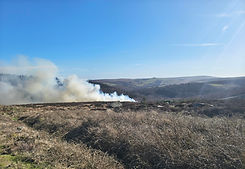
IDEAL UK FIRE is built up of four work packages, led by different organisations and team members.


Click to see our partner organisations, helping to bring modern wildfire research to the UK.
Determine impacts on carbon and biodiversity
Assess land management strategies
Create national-scale modelling techniques
Develop training
initiatives
WHAT WE DO
IDEAL UK Fire aims to determine the environmental costs and benefits of vegetation management approaches on biodiversity, wildfire hazard, and carbon in the most fire-prone landscapes in the UK. We will embed this knowledge in accredited land management training to support the development of site management plans that achieve desired landscape carbon and biodiversity benefits.
AIMS
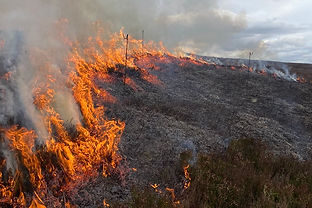
PROJECT WORK PACKAGES
The project is formed around four Work Packages led by different organisations and members of the project teams.
Generalised framework
Generalised framework
Biodiversity
Carbon
Tradeoffs
Biodiversity
Carbon
Trade-offs
3. Long-term ecosystem modelling
Biodiversity modelling
Landscape-carbon modelling
Wildfire simulation
2: Medium-term impacts of differing land management interventions (cutting, mowing, burning)
Net ecosystem carbon balance
Net ecosystem carbon balance
2: Medium-term impacts of differing land management interventions (cutting, mowing, burning)
Biodiversity management
Biodiversity management
1: Short term impacts of differing land management interventions (cutting, mowing, burning)
Management interventions
Management interventions
1: Short term impacts of differing land management interventions (cutting, mowing, burning)
Wildfire impact assessment
Wildfire impact assessment
Need for an operational decision
Need for an operational decision
Priorities
Carbon Storage, Biodiversity, Diverse additional ecosystem services
Priorities
Carbon storage, Biodiversity, Diverse additional ecosystem services
Available tools
Managed burning Mechanical cutting Re-wilding,
Rewetting
Available tools
Managed burning Mechanical cutting Re-wilding, Rewetting
Landscape
Wildfire regime, Atmos deposition, Soil, Hydrology, Climate, History
Landscape
Wildfire regime, Atmos deposition, Soil, Hydrology, Climate, History
Potential wildfire risk
Plan of operations
Political & social & ecological
Accredited training route
4: System conceptualisation, training and communication
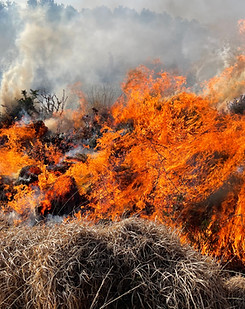
Direct measurement of the impacts of short-term plot-scale fuel management interventions and wildfire along a gradient of intervention intensity.
Objective: Determine impacts on carbon and biomass metrics following fuel treatment.

Medium-term plot responses to intervention on C-balance and biodiversity.
Objective: Determine within and between management variation in plot-scale biodiversity and C sequestration along edaphic-climate gradient over medium-term periods post intervention.

Next generation ecosystem modelling.
Objectives: Does modifying plot scale fuel mitigate landscape scale wildfire spread?
How does modifying plot scale vegetation impact plant, insect and bird biodiversity?
What impacts does management have on long term carbon balance?
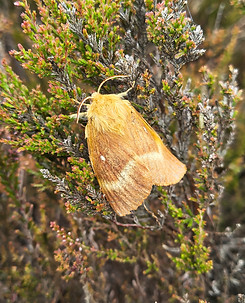
System conceptualisation, training and communication.
Objective: Develop accredited training that communicates the cost-benefits of different management tools and how these trade-offs vary between landscapes and spatiotemporal-scales.


